

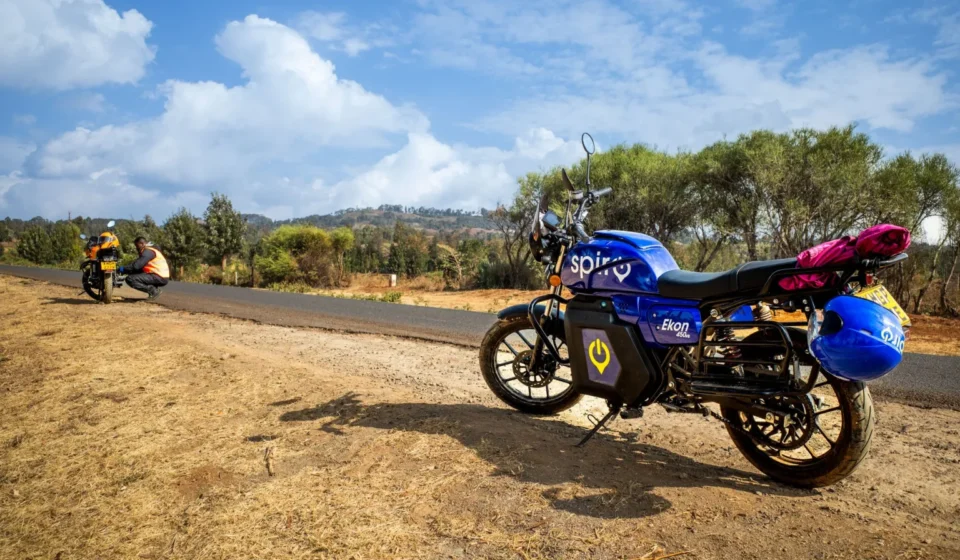

Africa’s electric mobility story has often been one of promise over progress. Infrastructure is scarce, power grids are unreliable, and most markets still run on cheap imported motorcycles. But Dubai-headquartered Spiro has spent the past two years trying to rewrite that narrative.
The company just announced a $100 million investment round led by the Fund for Export Development in Africa (FEDA), the development arm of Afreximbank. The raise marks Africa’s largest-ever EV mobility investment and cements Spiro as the continent’s most aggressive electric motorbike company.
Spiro says it plans to deploy more than 100,000 electric bikes across Africa by the end of 2025, a 400% year-over-year jump that underscores its ambition to dominate a category long considered too fragmented to scale.
Spiro’s growth has been dizzying. When CEO Kaushik Burman joined two years ago from Taiwanese battery-swapping giant Gogoro, the startup had just 8,000 electric bikes and 150 swap stations spread between neighboring countries Benin and Togo.
Today, it operates in six countries — including Rwanda, Kenya, Nigeria, and Uganda — with over 60,000 bikes deployed and 1,500 swap stations, where riders can swap depleted batteries for freshly charged ones. Battery swaps have surged from 4 million in 2022 to over 27 million this year, Burman told TechCrunch.
The secret behind that growth, Burman says, is a business model built for Africa’s realities.
In African cities, motorcycle taxis — known as boda bodas in Kenya or okadas in Nigeria — move people and goods through congested cities and rural towns alike. Yet for the millions of riders who rely on them, fuel costs are punishing.
“These drivers spend 10 to 12 hours on the road every day, covering 150 to 200 kilometers while paying high fuel costs. At the end of each day, most barely save anything,” Burman said. “That’s why electric mobility, especially through a battery-swapping model, fits this segment perfectly. They can’t afford downtime and get to save some money.”
That’s the wedge Spiro is leaning into. According to Burman, its electric bikes cost roughly 40% less up front than new gasoline models. In Kenya or Rwanda, where a typical gas bike sells for $1,300–$1,500, Spiro’s e-bikes cost around $800 and costs about 30% less per kilometer, since swapping batteries is cheaper than refueling, he says.
This combination of lower cost and faster payback has made Spiro’s model attractive for taxi drivers. Burman claims most riders — who pay a daily fee for access to its energy network — save up to $3 per day on fuel and maintenance. “That’s enough to buy another bike or start a small business over time,” the CEO remarked.